
Famous Ohio Mugshots
Fame changes nothing about a booking photo. It records an arrest event and stops there. It says nothing about the trial evidence, a later plea, or an acquittal. Ohio cases also leave very different paper trails. County jail and police files cover local custody. Court dockets hold the charges and outcomes, ODRC files cover state custody, and federal arrests sit in federal records. Plenty of original images have no stable official web address. In those situations the right source is the arresting agency or the records custodian, never a news portrait or a third-party mugshot site. The cases below were picked for their record chains. Each one shows how to follow a case from booking to final filing. Their endings differ sharply. One brought an acquittal after a reversed conviction; others ended in guilty pleas, affirmed sentences, or a federal case.
Notable Ohio Case Records
Each row pairs a case event with the custodian who can confirm it. A listed custodian may hold the court or custody record without posting any booking photo online.
| Case | Ohio event | Disposition or status in the research | Record trail |
|---|---|---|---|
| Sam Sheppard | Cuyahoga County, 1954 | First conviction; retrial ended in acquittal in 1966. | Cuyahoga Common Pleas, appellate records, and historical collections. |
| John Dillinger | Lima / Allen County custody, 1933 | Arrest and jail escape; no Ohio conviction reported. | Allen County jail and sheriff records; FBI historical files. |
| Ariel Castro | Cleveland, 2013 | Guilty plea to 937 counts; life without parole plus 1,000 years; later died in ODRC custody. | Cuyahoga Common Pleas and Cleveland law-enforcement files. |
| Anthony Sowell | Cleveland, 2009 | Convicted on 11 aggravated-murder counts; 11 death sentences affirmed in 2016. | Cuyahoga Common Pleas and Ohio Supreme Court. |
| Michael Madison | East Cleveland, 2013 | Convictions and death sentences upheld with specified exceptions; execution stayed for postconviction proceedings. | Cuyahoga case CR-13-579539-A and Ohio Supreme Court. |
| Rhoden-family case | Pike County, 2018 arrests | Later individual pleas, verdicts, and sentences; confirm each person's current posture in the docket. | Pike County Common Pleas and Ohio Attorney General records. |
| Lester Eubanks | Richland County sentence; ODRC escape, 1973 | USMS identifies him as wanted by the Ohio Adult Parole Authority for escape. | Richland Common Pleas, ODRC, and USMS fugitive records. |
| Larry Householder | Federal arrest in Ohio, 2020 | Convicted of racketeering conspiracy; sentenced to 20 years in June 2023. | U.S. District Court for the Southern District of Ohio. |
Ohio Sam Sheppard Case Record
Sam Sheppard's case began in Cuyahoga County. Police arrested him after his wife's 1954 killing, and prosecutors tried him for murder. The first state trial ended in a conviction. The U.S. Supreme Court then stepped in, holding that trial publicity denied him a fair trial. Federal habeas relief followed, and a retrial was ordered. In December 1966 a Cuyahoga County jury acquitted him. The Supreme Court of Ohio biography of Justice James F. Bell walks through that trial history and the eventual result. The original criminal file sits with Cuyahoga County Common Pleas and related law-enforcement archives. Cleveland-area legal-history collections may hold more case material. No stable official scan of his booking photo exists online. Anyone seeking the original image should ask the court or arresting-agency custodian for the record series and its source date.
Ohio John Dillinger Jail Record
John Dillinger's Ohio chapter is an escape story. Dayton police arrested him on September 22, 1933, per the FBI's historical account. He waited in the Lima jail in Allen County for trial. That lasted less than a month. On October 12, armed associates posing as Indiana officers entered the jail. They attacked Sheriff Jess Sarber and freed him. So the record shows an Ohio arrest and escape, not an Ohio conviction. Dillinger was later arrested in Arizona and escaped Indiana custody. Federal agents killed him in Chicago in 1934. The FBI's case history documents that full sequence. For Ohio records, three leads stand out. They are the Allen County jail register, the sheriff's file, and any booking image. Federal investigative files and historical images can add context. A wanted poster, though, is not the 1933 booking photo. Ask the local custodian for the jail register and image series. Then confirm any transferred files with the holding archive.
Ohio Ariel Castro Court Record
Ariel Castro's arrest came on May 6, 2013. Cleveland police booked him that day. Prosecutors then obtained an amended indictment charging 977 counts. Under a deal, Castro pleaded guilty to 937 of them. The court sentenced him to life without parole plus 1,000 years. He later died in ODRC custody. The plea and the sentence, not the arrest photo, define how this case ended. Contemporary AP reporting carried by CBS and an AP sentence account lay out those events. The indictment, plea, sentence, and discovery files rest with Cuyahoga County Common Pleas and Cleveland-area law-enforcement or prosecutor files. A May 2013 booking photo ran widely in news coverage, yet the original should be requested from the Cleveland arresting agency or the Cuyahoga custodian. A courtroom shot or press image is no booking record, which is why an image's source and date matter as much as the face.
Ohio Anthony Sowell Court Record
Cleveland police found the victims at Anthony Sowell's Imperial Avenue home. That discovery led straight to his arrest. A Cuyahoga County grand jury returned an 85-count indictment. Eleven counts were aggravated murder. The jury convicted him on all 11 aggravated-murder counts plus the death specifications. The trial court then imposed 11 death sentences. In 2016 the Supreme Court of Ohio affirmed the convictions and sentences in State v. Sowell. The indictment, trial record, judgment, and appeal live in Cuyahoga Common Pleas and the Supreme Court of Ohio. Cleveland law-enforcement or prosecutor records are the lead for the booking image. Its provenance should be confirmed with the custodian. The court opinion fixes the legal outcome; a photo release does not, so check the clerk's docket for the judgment and any appeal before treating a booking entry as the end of the story.
Ohio Michael Madison Case Record
Michael Madison's 2013 arrest in East Cleveland brought an 85-count Cuyahoga County indictment and a capital prosecution. The case number is CR-13-579539-A. Ohio's highest court affirmed his convictions and death sentences. Only certain kidnapping-related counts and specifications were excepted. The court later stayed his execution while state postconviction proceedings ran their course. The Supreme Court of Ohio's case entry, along with a later docket filing, marks the appellate trail.
Where do the originals live? Cuyahoga County Common Pleas holds the indictment and sentence. The Supreme Court capital docket carries the rest. No stable official booking-photo URL exists, so ask East Cleveland or Cuyahoga law enforcement directly for an image. Confirm it came from the original jail record before calling it a mugshot. The stay itself is simply a procedural status in an ongoing postconviction phase.
Ohio Pike County Case Records
The 2018 Pike County case stunned Ohio. Officials announced arrests in the Rhoden-family homicides. Those taken into custody were George "Billy" Wagner III, Angela Wagner, George Wagner IV, and Edward "Jake" Wagner. Each faced eight aggravated murder counts with death specifications. Years later, Jake Wagner pleaded guilty to all eight murders, according to Ohio Attorney General material. Angela Wagner also pleaded guilty for her role. An AP account put her sentence at 30 years. It also traced the conviction and sentencing history of other family members.
The Attorney General's plea statement and the AP disposition report document those later stages, including the pleas and reported sentences. One caution matters here. A shared investigation does not produce shared outcomes. Pike County Common Pleas keeps each indictment, plea, judgment, and later docket entry. Check every person's court file separately. Booking images, when released, should trace back to Pike County custody or the arresting agency. A text announcement from the Attorney General is not the image custodian unless it names a photo's source. That habit keeps the record straight, since one case can end in very different pleas, verdicts, sentences, and appeals.
Ohio Lester Eubanks Fugitive Record
Lester Eubanks is still on the run. The U.S. Marshals Service says the Ohio Adult Parole Authority wants him for escape. He was serving a life sentence for a 1965 Richland County case. In 1973 he walked away from ODRC custody during an honor furlough. His earlier death sentence had been commuted to life without parole. The official USMS profile details his fugitive status. It also warns the public against unsafe action.
Who holds what here? Richland County Common Pleas owns the original criminal case. ODRC keeps the corrections records. USMS holds the escape notice, along with current public images and age-progression material on its file and poster. Treat those as fugitive-notice photos, not a new Ohio booking photo, and follow the current federal notice and its instructions before sharing anything. An old image or an unverified location claim is not current evidence.
Ohio Larry Householder Federal Record
Larry Householder's 2020 arrest made federal headlines. He and other defendants were charged in the HB 6 corruption investigation. A jury convicted him of racketeering conspiracy. The U.S. Attorney for the Southern District of Ohio announced the penalty. In June 2023, Householder received 240 months. That is 20 years in prison. The U.S. Attorney's sentence announcement documents the federal disposition and the basis for the term.
Where do the papers sit? The U.S. District Court for the Southern District of Ohio holds the indictment, trial exhibits, verdict, judgment, and sentence. For a federal booking image, FBI Cincinnati or USMS custody records are the route, since no stable authenticated photo URL exists. A news portrait or courthouse shot is not a mugshot, and this trail shows why an Ohio arrest does not always belong in a county jail search.
Ohio Arrest Images and Records
Ohio keeps no single statewide archive of booking photos. The arresting agency keeps the original. That means the sheriff, jail, municipal police department, or regional jail, each with its own retention schedule and lawful limits. Exceptions can apply. Ohio's public-records law opens a door to request a record from the office that holds it. Name the specific booking sheet, image, case number, or release record you want, and ask for the legal basis behind any denial or redaction.
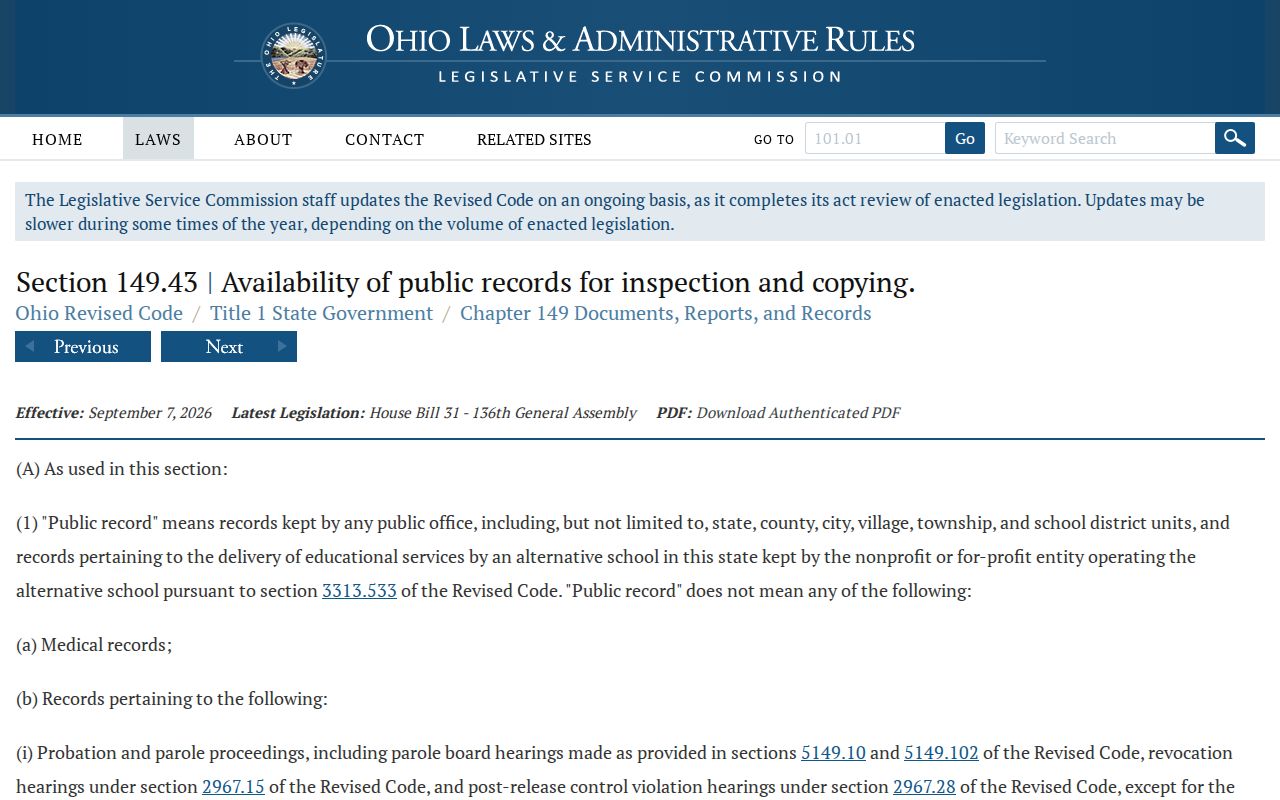
A good records request is specific. Name the likely agency, the person, and the approximate date. Add a case or booking number if you have one. List each record you want, one by one. Some material stays restricted, including juvenile, sealed, expunged, victim, medical, safety, and active-investigation records.
Ohio Revised Code § 2927.22 adds another rule for publishers. It bars negligently asking or accepting payment from a subject to remove or change criminal-record information. It also creates no blanket right to erase accurate records online. For an old case, check the local retention schedule. Ask whether the file moved to an archive. Do not assume a missing image never existed.
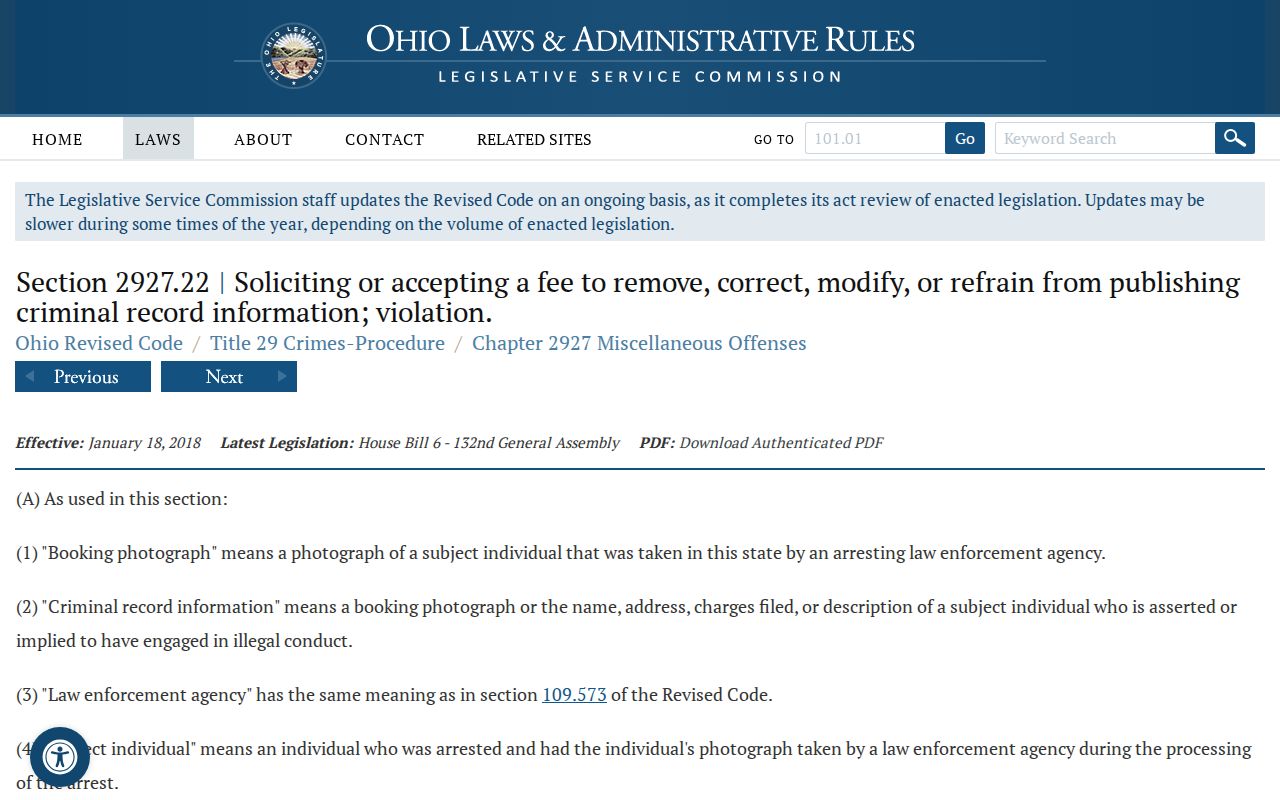
This publication rule governs records generally, not any one case file or disposition. A sealing or expungement order follows a separate legal process.
Trace an Ohio Arrest Record
Where you look depends on the question. Custody, a court result, a prison profile, and an old arrest file are different questions. Each lives in a different place. Ohio's statewide systems can point the way. The local clerk or agency often keeps the originals. The Ohio statewide records hub covers those first steps in plain terms. For older material, the Ohio archives page walks through the state-history path.
- Start with the arrest location. Record the county, municipality, approximate date, arresting agency, and any known booking or case number.
- Check custody and case records separately. A county jail roster or agency response can document intake; the municipal or Common Pleas clerk documents charges and disposition.
- Use the state court directory. Match the county and court type, then confirm the case number, filing, plea, verdict, sentence, and later appeal with that clerk.
- Ask the records custodian for the image. Request the original booking photo and its source date. If the agency transferred or destroyed the record under its schedule, ask where the series went.
- Check later custody only when relevant. ODRC covers state-prison and department-supervision profiles; federal custody follows a separate federal record route.
Start at the Ohio Courts portal. It gathers statewide court-system information and links. The Supreme Court's county directory helps you find trial courts by county. One catch, though. No single public search covers every Ohio case or court image. Use the portal to find the right court's information. Then confirm the case details with the local clerk. A federal arrest is different, so search federal court and U.S. Attorney records rather than forcing it into a county booking path.